• Home
  • About
  • Contact
  • Blog
  • A Relaxing Stroll Through the Book of Revelation
Menu

Rob Carmack

  • Home
  • About
  • Contact
  • Blog
  • A Relaxing Stroll Through the Book of Revelation

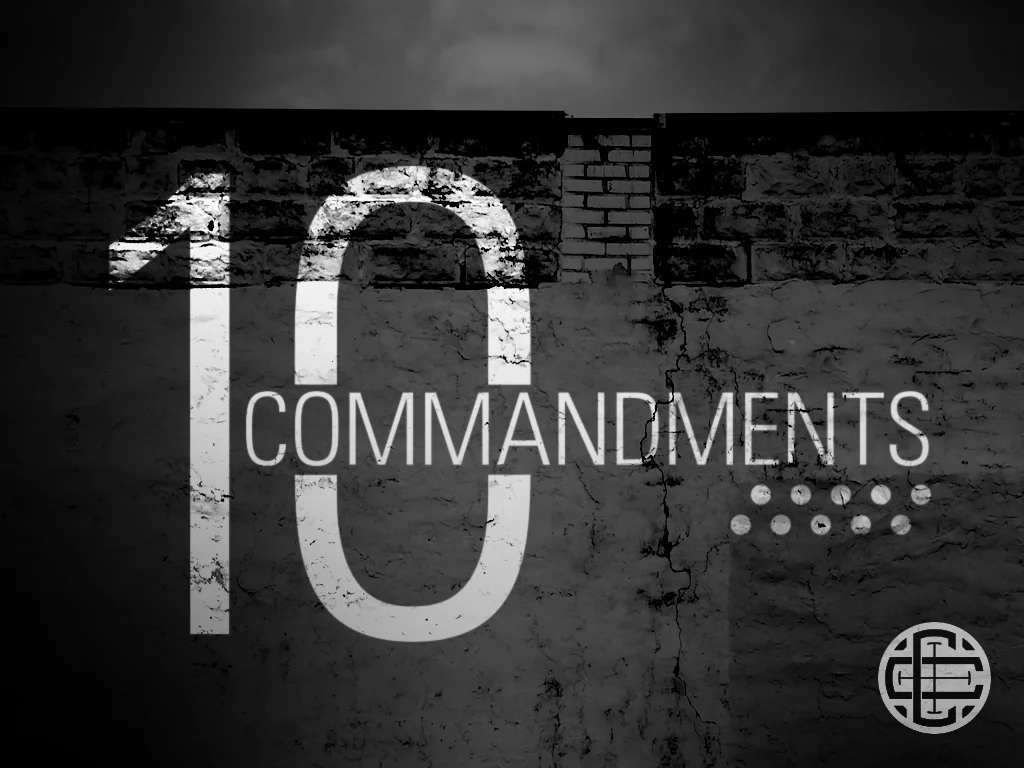
The Ten Commandments in Ten Sermons

September 8, 2014

I don't often post on the blog about my sermons, but yesterday I finished a series that I am particularly proud of. 

When we first began talking about starting a church, one of the first things I decided was that I wanted to preach a series about the Ten Commandments. I had to wait until after all of the Spring holidays had ended (Easter, Mother's Day, Father's Day) so I would have plenty of room on the calendar to explore the whole series, and that's what we did--from the end of June all the way until the beginning of September, we spent almost every Sunday talking through one of the Ten Commandments.

For me, this series was so much fun, and I learned a lot about what a sermon series can be and what can be done within the frame of the weekly Sunday conversation between the preacher and other people in the room (and online). Basically, I remembered how much fun preaching can be.

So if you want to hear the series, you can stream it through the Collective Church website, or you can download all ten parts on our iTunes podcast page (or you can just subscribe to the podcast to get weekly sermons delivered right to your listening device).

Thanks for listening and for reading. I'm thrilled to be doing the work I'm doing, and I can't wait to start the next series.

Comment

Pastors & Powerlessness

August 18, 2014

When something terrible happens, lots of people seem to want to hear from their pastors and church leaders. We are expected to have some kind of voice in whatever conversation is happening in the world.

When there is a global crisis, we (pastors) are expected to speak wisdom into the chaos.

When a celebrity commits suicide and lots of people start voicing opinions about the nature of depression, we are expected to weigh in on the spiritual dimension of such a thing.

When a gunman charges into an elementary school, people look to pastors to say something that will give them some kind of comfort.

When nearly a hundred young girls are abducted from an elementary school in Uganda, people want to know that their pastors are concerned and are paying the proper amount of attention.

When an unarmed African-American is shot and killed by a police officer and an entire community is then hurled into the national spotlight and subjected to unspeakable violence and turmoil, people demand that their pastors say something—anything.

I think it’s always been this way. I was a youth pastor when 9/11 happened, and the Sunday that followed saw the highest attendance in that church’s history.

Lots of people, when faced with a crisis or a catastrophe or what seems like a major historic event, want to hear from their pastors.

I became a senior pastor for the first time back in February, and I have already experienced several moments when people have reacted to something in the news and looked at me as if to say, “Well? You’re on.”

So here’s my confession: I never know what to say.

Sure, I have opinions and emotions and thoughts and questions just like everybody else, but that doesn’t mean I’m any more qualified to speak out about an issue than anybody else. I went to seminary, not law school. If you have questions about the book of Leviticus or some obscure Hebrew phrase, I’m your guy. But when it comes to global events, I pretty much always feel out of my league.

My microphone isn’t very loud—compared to many of my peers, I don’t generate nearly as much traffic as someone who would be considered a prominent voice in the global community of faith—and I don’t have very many new thoughts. Most of the time I’m just as sad, overwhelmed, bemused, outraged, or heartbroken as anyone else. Whatever I say will never be enough, and I know it.

In the Hebrew Scriptures, there is a poem in which this writer talks about all the ways he is frustrated or angry with God. He even says that he feels like God has “forgotten” him. At one point, this poet says in a prayer, “I remembered you, God, and I groaned.” (Psalm 77)

Essentially, this writer is saying that he felt such deep anguish—such overwhelming grief—that he couldn’t even muster any more words. All he could do was groan.

I can do that.

People want to know why God would allow something so terrible to happen or what we are supposed to do now in a world where something tragic has occurred. But sometimes there are no answers that could possibly satisfy anyone—sometimes no words will do.

Sometimes all we can do is groan.

I believe in God, and I believe that God is good. However, it’s certainly not always easy to convince anyone else—or even myself—of these things. Sometimes God seems like an unconcerned teacher looking the other way while the bully reigns terror at recess. Sometimes God seems like a maniac. Sometimes God seems like something we made up in order to make ourselves feel better when we go through tough times. Like the poet says in the psalms, sometimes it feels like God has forgotten us.

That’s why I don’t know what to say. I think people want me to convince them that God is still good in the midst of these tragic events, and I don’t know how to do that.

Sometimes the only thing I know how to do is groan.

As a pastor this makes me feel powerless, which I suppose is exactly what I am. I’m human, and I’m trying to figure all of this out just like everybody else.

So here’s what I can say to people who are hurting.

To people who are grieving…

To people who are afraid…

To people who feel unheard and unloved…

To people who feel that they have no home in this world…

To people who suffer from mental illness and depression and to the family members of the people who have lost someone to these afflictions…

To people in Iraq, whose children are being savagely murdered…

To people who have needed to pour milk into their eyes to relieve the pain from tear gas…

To anyone who has lost a loved one in an act of violence…

To our brothers and our sisters who are asking their pastors to please say something…

To all of these and more: I am groaning alongside you, and so are thousands of others.

If you are grieving, outraged, or heartbroken, we join you in that ache.

May we rediscover the goodness of this God as we learn to groan with one another.

Amen.
1 Comment
1795924_1406135911.8288.jpg

Four Carmacks and Counting

July 24, 2014

As I've mentioned before, our family is in the process of adopting a baby. 

We've already made it through the first few stages--mostly interviewing and filling out forms, like applying for a job, but the stakes feel much higher.

We still have a long way to go. There are more seminars and workshops to attend, books to read, people to meet, and bills to pay. It's not unlike having a biological baby, except instead of going to doctor appointments and paying for prenatal treatments, we are going to seminars and paying for the adoption services. Of course, the end result is the same (a baby). 

There are lots of stages in this process, but the part I have been dreading the most--the part that always makes me uncomfortable to talk about--is the fundraising stage.

I hate asking people for money. It makes me feel like I'm abusing my friendships or trying to trick someone into joining a pyramid scheme. It reminds me of that scene in Garden State when Zach Braff runs into a guy from high school and the guy says, "We all have dreams. I know I do. I'd like to talk to you about an exciting opportunity that people are talking about..." That's usually when people start pretending to get text messages and stop making eye contact.

But here we are--in the fundraising stage of the adoption process, needing way more money than we could ever find under the couch cushions (unless graham crackers count as money). 

Our t-shirt. $16 apiece.

So we've decided to make this fun. Caroline has an Etsy shop, which gives her the opportunity to make stuff she would have made anyway and to let people buy those items if they choose to do so. I'm working on an eBook that I hope to release in mid-September, and all of the proceeds from that will go to the adoption (I'll post more about the book in the next few weeks. This project is also why I haven't posted any new content on the blog in the past few weeks. Writing a book is hard). We're going to have some fun events, beginning with a Corn Hole tournament in Roanoke, hosted by our good friends the Fritzels, who went through this same process a year ago. We also have t-shirts, which you will be able to purchase when they arrive next week. We also have a GoFundMe.com page for anyone who simply wants to donate.

If you can't or simply don't want to donate or participate in our upcoming events, don't worry about it. No hard feelings. I certainly don't feel entitled to anyone's generosity, and I don't want you to feel like you need to avoid me in the grocery store if there are other things you'd rather give your money to.

That said, to those of you who have already donated or plan to order a t-shirt, thank you. That's all I really know how to say. You have my gratitude. What you have done (or plan to do) is an act of grace--a kindness that could never be fully repaid--and that will never be lost on me.

Anyway, thanks for reading and for your interest in my family. I will keep you posted on further developments.

Grace and Peace.

Tags Adoption
Comment

"I Didn't Want to Go" (or "The Endless Struggle Between Fear and Love")

July 2, 2014

Can I tell you a story I’m not proud of?

About four years ago, I received an email from a woman who attended the church where I was a teaching pastor. The email said, “My family attends [your church], and you are my sister’s favorite preacher. My sister is dying of cancer, and the doctors think she only has a couple weeks left. I think it would mean a lot if you came to see her. Would that be possible?”

I replied immediately and said that I would absolutely come and see her sister. The woman emailed back and said that they were moving her from the hospital into hospice care and that she would let me know when a good time would be—probably within the next couple days.

Here’s the part I’m not proud of: I didn’t want to go. It wasn’t because I didn’t care or because I had so much else going on in my life that I couldn’t possibly spare the time.

I didn’t want to go because I was afraid.

The dying woman was only two years older than me (she was 31). She had a husband and a two-year-old son. Other than these two details, I knew nothing else about her. I didn’t even know what she looked like. The church was very big, and it was entirely possible for a person to attend services every single week and simply get lost in the crowd.

Which brings me to why I was afraid.

I was afraid that she—the dying woman—would ask me why God was letting this happen and that I would have to tell her that I had no idea. I was afraid that she would be disappointed in me—that she would wish she had requested a different pastor from her church. But mostly, I was afraid to be that close to death. Like I said, she was two years older than me (two years younger than I am now), and she was facing my greatest fear. She was dying young, she felt afraid and helpless, and I was afraid to be so close to that much pain and sorrow.

So I waited to hear from the sister, feeling nervous every time my phone rang. A full week after I had heard from the sister, I had still heard nothing. I called the home phone number to check in and see if I had missed a message. The dying woman’s mother answered the phone and told me that her daughter was deeply sedated, so she wouldn’t ever know if I had come to see her or not. The mother also said that she had called her own pastor (she attended a different church), and he was with them now. Essentially, the mother was telling me “Thank you for your time, but your services are no longer required.” They didn’t want me to come see the woman after all.

We hung up, and I felt relieved. Again, I am not proud of this story. In fact, I almost deleted that sentence about feeling relieved, but I left it in because it’s completely true.

Three days later, I received an email saying that the woman had died.

I think about that experience all the time. I think about how afraid I felt and how I wish I had tried harder to see her before it was too late. I never met the woman, but I still feel like I let her down. My fear stopped me from being useful to her at her greatest moment of need.

Earlier this week I received a text from a childhood friend. He told me that his mother is dying, and they don’t know how long she has left. I didn’t even think about my response; it was instinctual. I instantly texted back and asked, “Can I see her?”

I’ve known this family for over half my life, and I love them so much. We don’t see each other much these days, but that’s only because life has pulled us all in different directions. There has never been a time when I didn’t feel a certain sense of endearment and warmth toward this family. So when my friend said that his mother was dying, I felt none of the fear I felt four years ago; I simply needed to see her.

I didn’t become braver in the last four years. I’m still a coward. But I love this family, so fear was simply not part of my thought process.

In the situation from four years ago, I had no personal attachment to the dying woman. I felt sad for her—deeply sad—but I had no direct personal connection with her, so my ability to feel love was consumed by own fears and insecurities.

In the situation from this week, my personal connection was so deep that fear never had a chance. There was no time to be afraid; the urgency love was too powerful.

I guess this is what it means when the Bible says that there is no fear in love and that perfect love drives out fear (1 John 4:18). Four years ago, fear nearly paralyzed me and all but made it impossible for me to sit with a dying woman. This week, love demanded that I go see my friend’s dying mother.

When a person is only a name on a page or a tiny .jpg file next to a screen name, fear comes easily. A lot of our hate comes from a place of fear—we fear the people we don’t understand, we fear their point-of-view, and we fear what might happen if they are right. And so that fear—that dehumanizing way of seeing the world—pulls us farther apart. It prevents us from existing in this world as we were meant to.

When the person we’re engaging has no face—when we don’t know them or at least can’t see them—it’s easier to engage with fear, because the unknown allows for that. That’s why it’s easier to make enemies on Facebook than in real life.

When a person’s understanding of God demands that they show hate toward others or allows them to dehumanize people who are different from them, they are operating from a place of fear—fear of other people and fear of their angry God.

However, when a person’s God says, “Love your enemies,” perhaps that is a way of saying, “Don’t let the fear stop you from being human. Perfect love drives out fear.”

When fear keeps us out of hospital rooms, it’s time to reengage our capacity for love.

May we love in ways that drive out fear.

Grace and peace.

Tags humanity, Love
2 Comments
lightstock_75566_xsmall_user_3106361.jpg

Tagged in a Game of Writer's Therapy (Blogging About Blogging With Other Bloggers!)

June 26, 2014

Tobias Fünke: "So what are your plans for this evening?"

Bob Loblaw: "I thought that maybe I would stay in and work on my law blog."

Tobias Fünke: "Ah, yes. The 'Bob Loblaw Law Blog'." 

* * *

My new friend and future Collective Church guest speaker Jessica Zan has included me in a "blog hop." It's kind of like a game of tag, but instead of nonsensically running around trying to make someone else "it," each included ("tagged") blogger is invited to answer a few questions about blogging. This worked out well for me, because I was just sitting here feeling guilty for not having written anything this week, and now I have an honest-to-goodness prompt. So thank you, Jessica, for giving me something to write about!

What am I writing or working on?

I've recently started a church, so most of my writing time these days is used to work on sermons. I'm starting a series this weekend on the Ten Commandments, so that's been my primary focus. 

As far as the blog is concerned, I've been trying to think of new subjects to approach, but the ideas have been coming slowly and not very fully formed. When I first started this blog last year, I had plans to post something new at least three times a week. It worked for the first six weeks, but lately I've been lucky to get one new post up every week. This is partially due to spending so much time and energy working on the church, but it's also partially due to a severe lack of ideas. I've been considering writing a blog series exploring the book of Genesis...

I tend to write best (and quickest) when I get worked up about something, like gender roles or doubt or hearing that someone has been denied membership at a church for some arbitrary reason. When I hear about those kinds of things, the blog ideas come really easily. However, I don't want to be a blogger who only writes out of anger or frustration.

So apparently this first blog hop question just saved me about an hour's worth of therapy.

How does my work differ from others in its genre (commingled with Why do I write what I do)?

I both love and hate this question. I love it because it forces me to really think about what I'm doing. I hate it because I feel like the most honest answer is that my work doesn't differ at all from others in its genre because I'm a hack.

I feel like my sermons are different, but it's hard to say why. I try really hard to create sermons that don't sound like anything I ever heard when I was growing up in church but also don't sound like so many sermons you hear at churches today that include the obligatory three-to-five application points that often seem wedged into the message to make it seem more "relevant." Those are specific styles that work for lots of people, but I feel like there is a lot of that out there already, and that doesn't really move me like it seems to move others. That said, I'm not really sure how to specifically say what's different about my sermons (without sounding incredibly self-serving, that is). 

However, the reason I write (and preach) what I do is because I'm interested in helping people engage in a conversation about faith and reality. Specifically, I'm interested in helping people be set free from religious baggage in order to have a more life-giving experience. If someone has spent a significant time in church and has ever thought, "This can't be right. People shouldn't treat each other this way," my hope is to provide a new way of thinking that might help that person discover a new, healthier way of thinking about faith and life. I believe Jesus wants to save us from all of the things that torment us and that there is a God who wants to restore shalom in the world.

How does my writing process work?

I think the word "process" is pretty generous. I try to be sitting down and writing by around 8:30 every morning, after I give my kids breakfast and make my first cup of coffee of the day. Then the process depends on what I'm working on at the moment. If I'm prepping a sermon, I tend to write out the main stuff by hand and then memorize the basic order of what I want to say. If I'm working on a blog, I'll write a rough draft and, if I'm not in any hurry to publish it, I will send it to a friend for proofreading. If I want to put it out that day or the next morning, I'll run it through Grammarly.com to catch any massive typos and make sure I haven't accidentally plagiarized anything (I always do a plagiarism check; it's a habit I formed in graduate school). Of course, all of this happens with frequent coffee refills, trips to the bathroom, Facebook page refreshes, and my two-year-old daughter climbing up in my lap to see what I'm doing and/or to demand that I read her a book.

I always listen to music when I'm working. In fact, in the amount of time I've been working on this post, I have listened to Radiohead, the Rolling Stones, Soundgarden, and Gordon Lightfoot (yeah, you read that right; "Sundown" is a great song). 

I also read a lot, which can prompt a new thought that might become a blog post at some point. Nadia Bolz-Weber's excellent book Pastrix gave me a couple of great quotes that became posts. So I'd consider reading to be part of my writing process.

What other writers would I like to introduce you to?

It's hard to choose, but I'd say-

Christina May Gibson at The Roundabout Way

Mike McHargue (aka "Science Mike") at www.mikemchargue.com

Dave Fuller ("About Pops") at www.aboutpops.com

Katie McKown (Pastor of Scottsville Baptist Church) at Hermeneutics in High Heels

1 Comment
lightstock_55466_small_user_3106361.jpg

The Beautiful Terror of Doubt

June 17, 2014

Doubt can be terrifying.

About a year ago, I went through the most intense and frightening season of doubt I have ever experienced. I wondered if anything I had ever believed was actually true. I doubted the existence of God, the validity of the Bible, and even my own ability to think rationally about these kinds of questions. I worried that the human brain was so powerful that it could convince a person to believe in God purely to avoid the prospect of our own inevitable death and subsequent non-existence.

As if that weren’t enough, I worried about what my doubts might mean for the rest of my life and my family. It’s not like I worked at a box factory where my peers and coworkers couldn’t care less about what I believed just so long as I kept making boxes.

I worked at a church. I was a teaching pastor at a church, which means I was largely responsible for the spoken message on any given weekend. So this new doubt was not merely threatening my paradigm and whether or not I believed anything happens after we die; it was threatening my livelihood in my present reality.

A pastor can lose his job for doubting.

There was one point at which someone I worked with at the church found out about my doubts. I had not intended to tell him, but I made the mistake of submitting a cryptic prayer request to the church’s prayer team which prompted an act of follow-up (I’ve told the story of how this happened in a previous sermon at Collective Church). Upon learning that I was having doubts, what was my coworker’s advice (instruction)? “Don’t tell anyone.”

We can’t have pastors who doubt, can we?

So I kept it to myself.

I started seeing a therapist and, more importantly, I registered for a two-day workshop with Rob Bell in Laguna Beach. I knew that Rob Bell had gone through his own season of doubt, so maybe he could help me work through my own stuff.

At the conference, I raised my hand and asked about this very thing, and Rob Bell (I don’t feel comfortable using only his first name because I’m afraid it will give the impression that I’m namedropping or that I’m trying to imply that he and I are friends or that he knows that my first name is also Rob—none of which are true. So I’m just going to keep it awkwardly and perhaps unnecessarily formal) said some very helpful and meaningful things. He talked about going through paradigm shifts and how the human experiences movement through different stages of consciousness (the construct he used to describe this is called Spiral Dynamics, which is completely brilliant, and you should check it out). But mostly, he told me that what I was going through was healthy and normal and an important part of human growth.

That was nice to hear.

But the thing that really helped me was what happened next. After the session ended, a guy named Mike McHargue came over to where I was standing and invited me to join him and his friends for dinner across the street. He told me that he had been a Christian all his life and became an atheist and had rediscovered his faith in the past two years. He offered to share his story with me, and he wanted to hear mine.

Let me just say this: I love Rob Bell, and I could sit and listen to him talk for hours without ever feeling bored or restless. Those two days of listening to him were life-changing for me. However, what meant the most to me on that trip were the two hours I spent with Mike and his friends (shout out the Chris Hawley, Ty Silzer, and Gregg Nordin), talking about doubt and faith, hope and meaning—exchanging stories and learning that I was not alone.

When I was instructed to keep my doubts to myself, I felt like I was in a mental form of solitary confinement of my own making.

When I was sitting on a rooftop in Laguna Beach talking about what it means to doubt and sharing those thoughts with other people, I felt freer than I had in a very long time.

So yes, doubt can be quite scary. It can also be healthy and life changing. It can open us up and help us to think about everything in a thousand new ways.

And so now it is nine months later, and I am the pastor of a new church. My hope is renewed, and my faith is my own. I see resurrection in places I never would have seen before. I believe I am part of a giant story that God is telling, and the whole story revolves around a resurrected Jesus.

But I never would have gotten here if I had not first learned to doubt and question and wrestle with my own previously-held ideas.

There had to be a death before there was a resurrection.

So if you are doubting, you are not alone. If you are rethinking your own beliefs, perhaps this is the beginning of something big and powerful for you.

Whatever you do, don’t keep it to yourself. Talk about it. Own it. Lean into it. Perhaps your doubts are trying to teach you something new. Perhaps they are trying to lead you to something better and bigger and healthier than you had ever experienced before.


*Note: Mike McHargue recently spoke at Collective Church. Click here to hear it.

Tags Doubt
3 Comments
← Newer Posts Older Posts →

Latest Posts

Featured
Dec 17, 2021
And Also With You...
Dec 17, 2021
Dec 17, 2021
May 6, 2019
The Voice We Needed: A Lament for Rachel Held Evans
May 6, 2019
May 6, 2019
Apr 17, 2017
In Search of the Next Word
Apr 17, 2017
Apr 17, 2017
Jan 12, 2017
Best Books of 2016
Jan 12, 2017
Jan 12, 2017
Sep 29, 2016
Don't Waste Your Privilege
Sep 29, 2016
Sep 29, 2016
Sep 26, 2016
"I Asked For Wonder"
Sep 26, 2016
Sep 26, 2016
Sep 21, 2016
There Is Only 'Us'
Sep 21, 2016
Sep 21, 2016
Sep 16, 2016
Book Review: Finding God in the Waves
Sep 16, 2016
Sep 16, 2016
Sep 15, 2016
Tolerance Is Weak
Sep 15, 2016
Sep 15, 2016
Sep 6, 2016
"I Am Not the Gatekeeper" - Holiness and Keeping Your Distance
Sep 6, 2016
Sep 6, 2016